
What happens when an embryo stops developing?
At first, the answer might seem straightforward: development simply comes to a halt. But embryonic diapause — a natural state in which development is temporarily suspended — is much more interesting than that.
During diapause, the mouse embryo remains alive for an extended period while delaying implantation and further development. The cells of the epiblast, which will eventually generate the entire body, remain pluripotent and preserve their developmental potential.
But staying alive is not the same as doing nothing.
In this study, we discovered that the dormant epiblast continues to actively reorganise itself and that Wnt/β-catenin signalling and its downstream factor Esrrb are central to maintaining this dynamic state. Our findings reveal that diapause is not developmental stasis, but a carefully regulated state in which the embryo continuously adapts its organisation while waiting for the right conditions to resume development.
A pause that is not really a pause
The epiblast undergoes major changes during normal development.
Before implantation, pluripotent cells are organised as a relatively simple group within the blastocyst. After implantation, they rapidly proliferate, polarise and reorganise into an epithelial structure that will form the foundation of the future embryo.
So what happens if we put this developmental programme on hold?
During diapause, the embryo remains at the blastocyst stage, but the epiblast does not simply freeze in place. We found that its architecture continues to change over time.
The tissue gradually reorganises, even though the embryo is not progressing through the usual sequence of developmental stages.
This immediately raised an intriguing question:
If development is paused, what is telling the cells how to maintain and reorganise their tissue?
Looking for the signal
To answer this question, we developed a three-dimensional culture system that allowed us to reproduce key aspects of epiblast organisation outside the embryo.
This gave us an opportunity to manipulate signalling pathways and watch what happened to the tissue.
One pathway stood out: Wnt/β-catenin signalling.
Wnt signalling is well known for its role in embryonic development and stem-cell biology. But surprisingly, the pathway is not essential for the earliest stages of mouse embryogenesis under normal conditions. Embryos can develop through implantation even when this pathway is disrupted.
Why, then, would the dormant epiblast need it?
The answer appears to lie in the unusual conditions of diapause.
Wnt helps the dormant epiblast stay organised
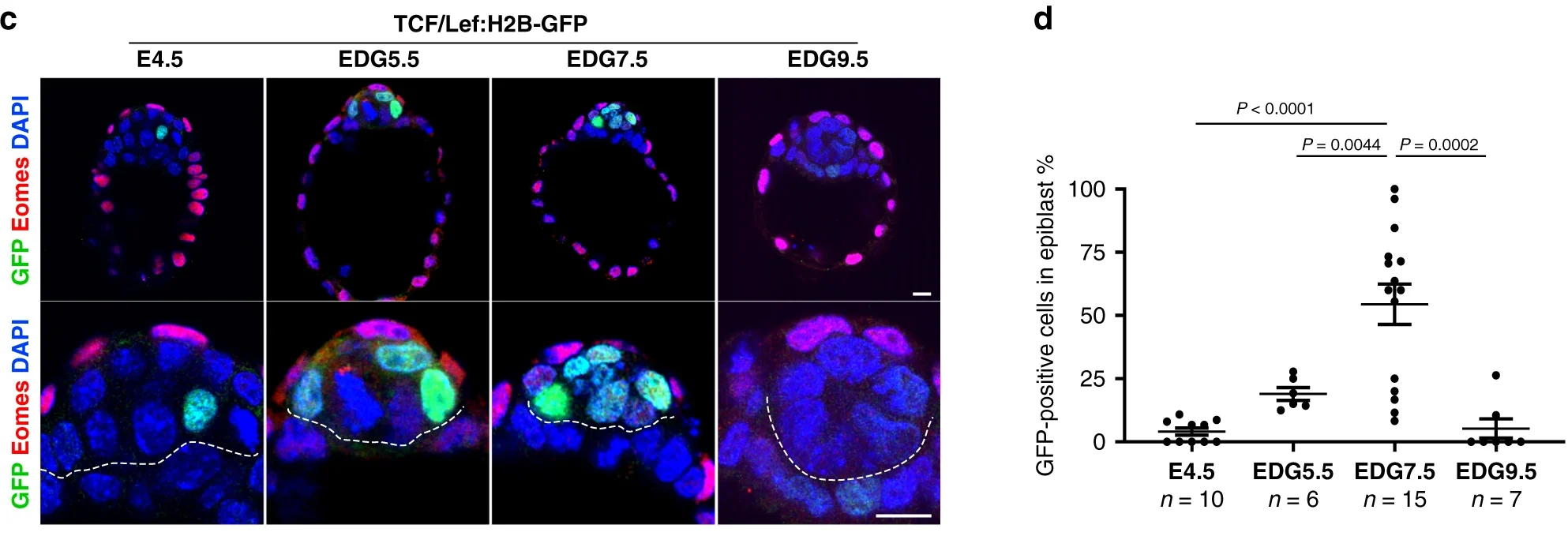
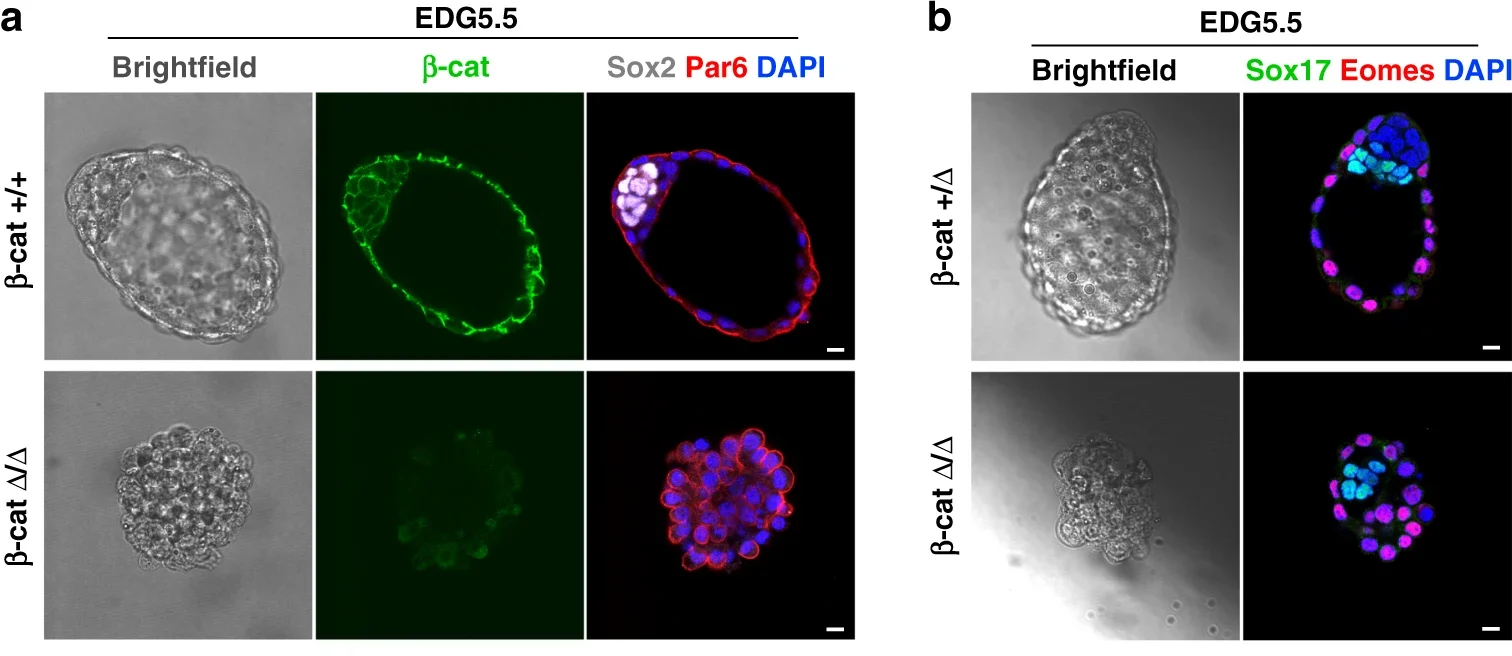
We found that the canonical Wnt pathway becomes an important regulator of the epiblast during diapause.
At the centre of this response is Esrrb, a transcription factor closely associated with the naïve pluripotent state.
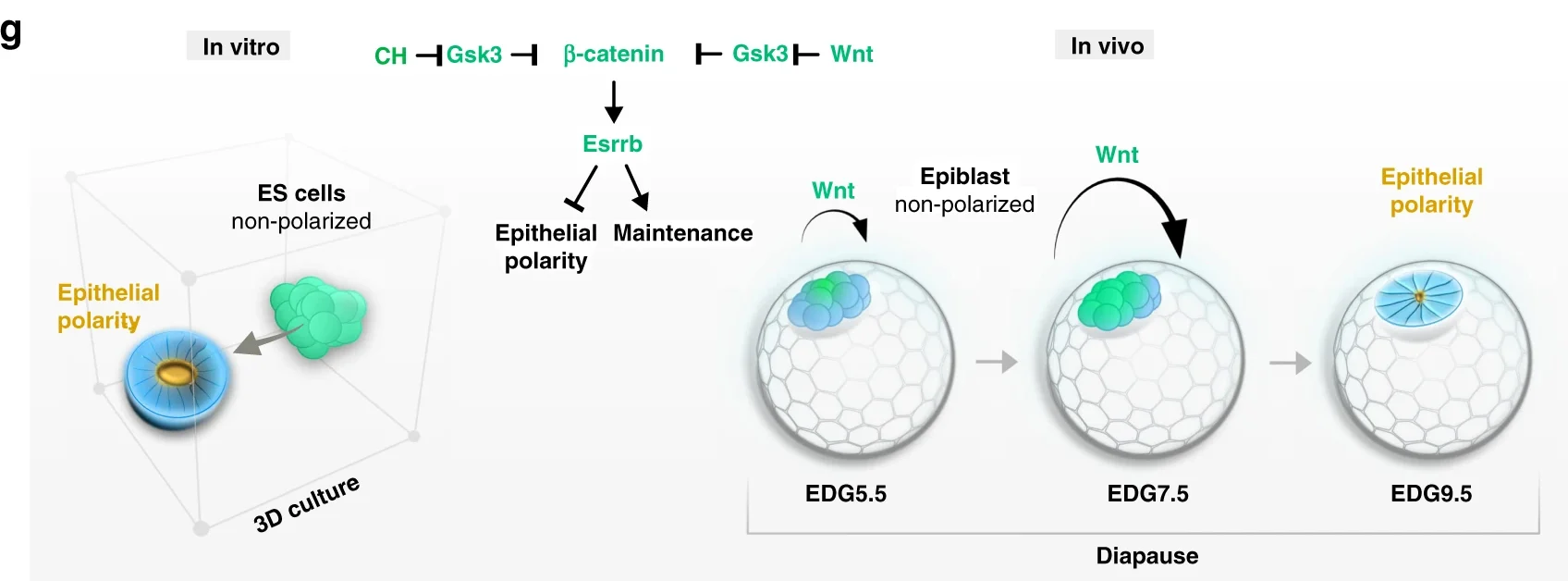
Wnt/β-catenin signalling controls Esrrb activity, and together they regulate the organisation of the pluripotent lineage.
When we interfered with this pathway, the epiblast could no longer maintain its normal tissue architecture. Conversely, manipulating Wnt signalling changed the organisation and behaviour of the pluripotent cells.
This revealed an important principle:
the same signalling pathway can have very different importance depending on the developmental context.
During normal embryogenesis, Wnt/β-catenin/Esrrb signalling can appear surprisingly dispensable at these early stages. During diapause, however, it becomes essential for maintaining the epiblast.
The embryo has not stopped responding to developmental signals. It has changed what those signals are needed for.
The dormant embryo keeps moving
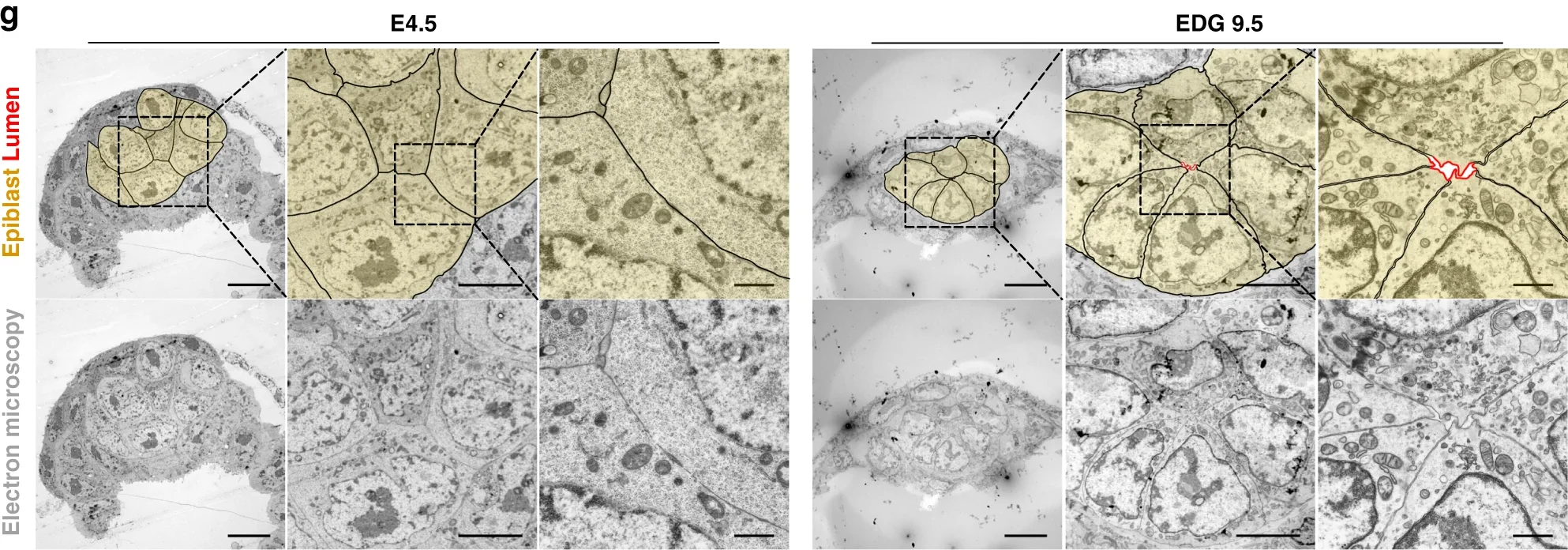
One of the most interesting observations from this work was that the architecture of the epiblast changes progressively during diapause.
This means that dormancy is not a static state.
The embryo is not simply waiting in suspended animation. Instead, the pluripotent tissue remains active, adjusting its organisation while preserving its developmental potential.
This led us to think about diapause in a different way.
Rather than viewing it as development switched off, it is better understood as development redirected.
The embryo suppresses the processes that would normally drive it towards implantation and differentiation, while maintaining other mechanisms that preserve the integrity and functionality of the pluripotent tissue.
Why does the embryo need Wnt during the pause?
This raises a fascinating question: why should a dormant embryo invest energy in actively reorganising its epiblast?
One possibility is that maintaining the correct tissue architecture is essential for preserving developmental competence.
The epiblast is not simply a collection of interchangeable pluripotent cells. It is a structured tissue whose cells interact with one another and with their surrounding environment.
During diapause, this tissue has to remain viable and organised for an extended period without progressing into the next stages of development.
Wnt/β-catenin/Esrrb signalling provides part of the mechanism that makes this possible.
In other words, the embryo needs to keep organising itself even while it is waiting.
What diapause teaches us about development
There is a broader lesson here.
Developmental mechanisms are often studied by looking at what happens when an embryo moves from one stage to the next. Diapause gives us a completely different perspective.
It allows us to ask:
What does an embryo need to do when it is not allowed to move forward?
Our findings suggest that the answer is surprisingly complex. The embryo must maintain its cells, preserve pluripotency, reorganise its tissue and respond to its environment — all while delaying the developmental programme that would normally take it forward.
This makes diapause a powerful natural experiment for understanding how developmental potential is maintained.
It also reveals that some signalling pathways that seem redundant during rapid embryonic development can become essential when development is prolonged or interrupted. The requirements of the embryo therefore depend not only on where it is in development, but also on how quickly development is allowed to proceed.
Development does not simply stop
Our work shows that embryonic diapause is much more than a developmental pause.
The dormant epiblast remains a dynamic tissue. Its architecture continues to change, and Wnt/β-catenin/Esrrb signalling helps coordinate this reorganisation and maintain the pluripotent lineage.
The embryo is essentially doing something remarkable: it keeps itself ready for the future without actually moving into that future.
This idea has changed how we think about developmental dormancy. A dormant embryo is not an embryo that has stopped developing. It is an embryo that has found a different way to organise, survive and preserve its potential until conditions are right to continue.
In short
We discovered that Wnt/β-catenin/Esrrb signalling controls the tissue-scale organisation and long-term maintenance of the pluripotent epiblast during embryonic diapause. Although this signalling pathway is surprisingly dispensable during early normal development, it becomes important when development is placed on hold.
Our findings reveal that diapause is not developmental stasis. Even while the embryo waits, its cells remain active, its tissue architecture continues to change, and signalling pathways work to preserve its developmental potential.
Read the research article:
Wnt/Beta-catenin/Esrrb signalling controls the tissue-scale reorganization and maintenance of thepluripotent lineage during murine embryonic diapause
Fan R, Kim YS, Wu J, Chen R, Zeuschner D, Mildner K, Adachi K, Wu G, Galatidou S, Li J, Schöler HR, Leidel SA, Bedzhov I.
Nature Communications 2020
https://doi.org/10.1038/s41467-020-19353-0

You must be logged in to post a comment.