RESEARCH DIRECTIONS
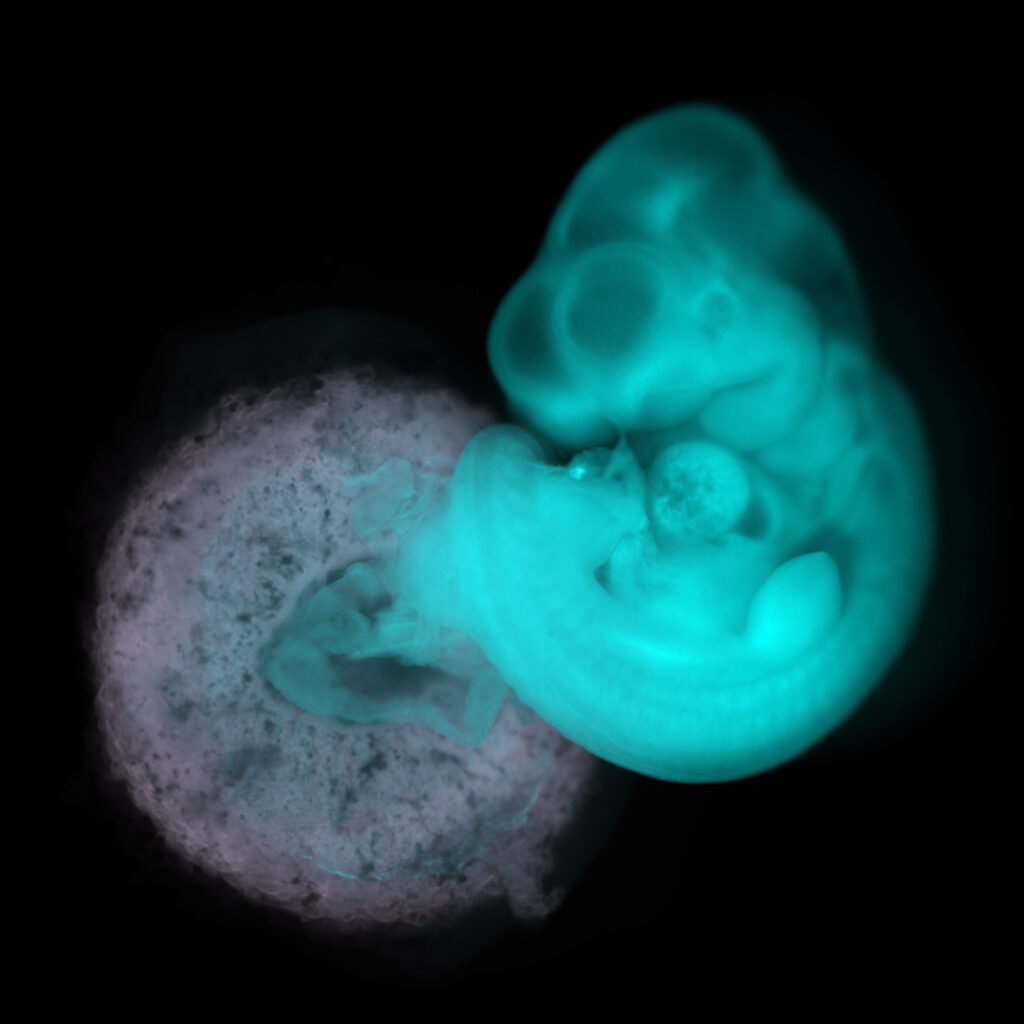
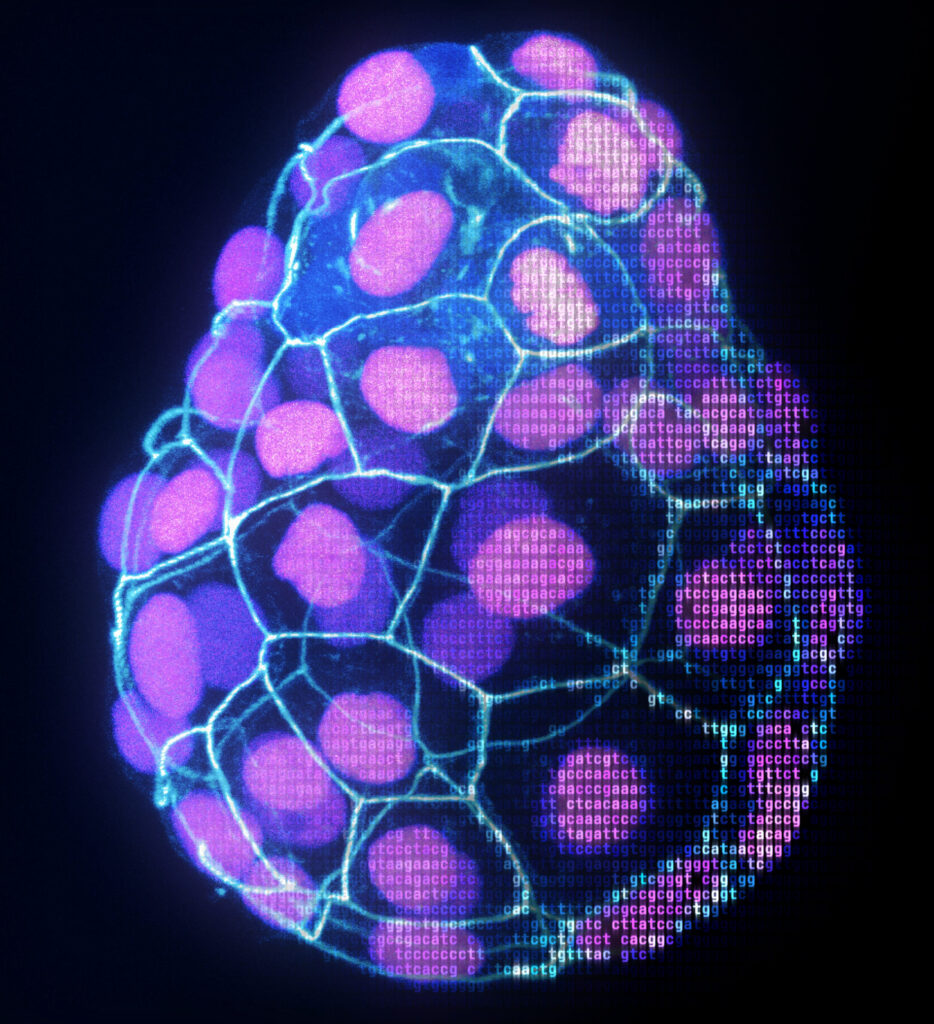
Infertility affects around one in six people worldwide and remains a major global health challenge. Despite advances in assisted reproductive technologies, implantation failure is still a major barrier to successful pregnancy. Embryo implantation is the process of establishment of the first direct interactions between the embryo and the mother. Our research focuses on this critical period of mammalian development, through three interconnected research directions.
1
– FROM A SINGLE CELL TO A FINAL SHAPE –
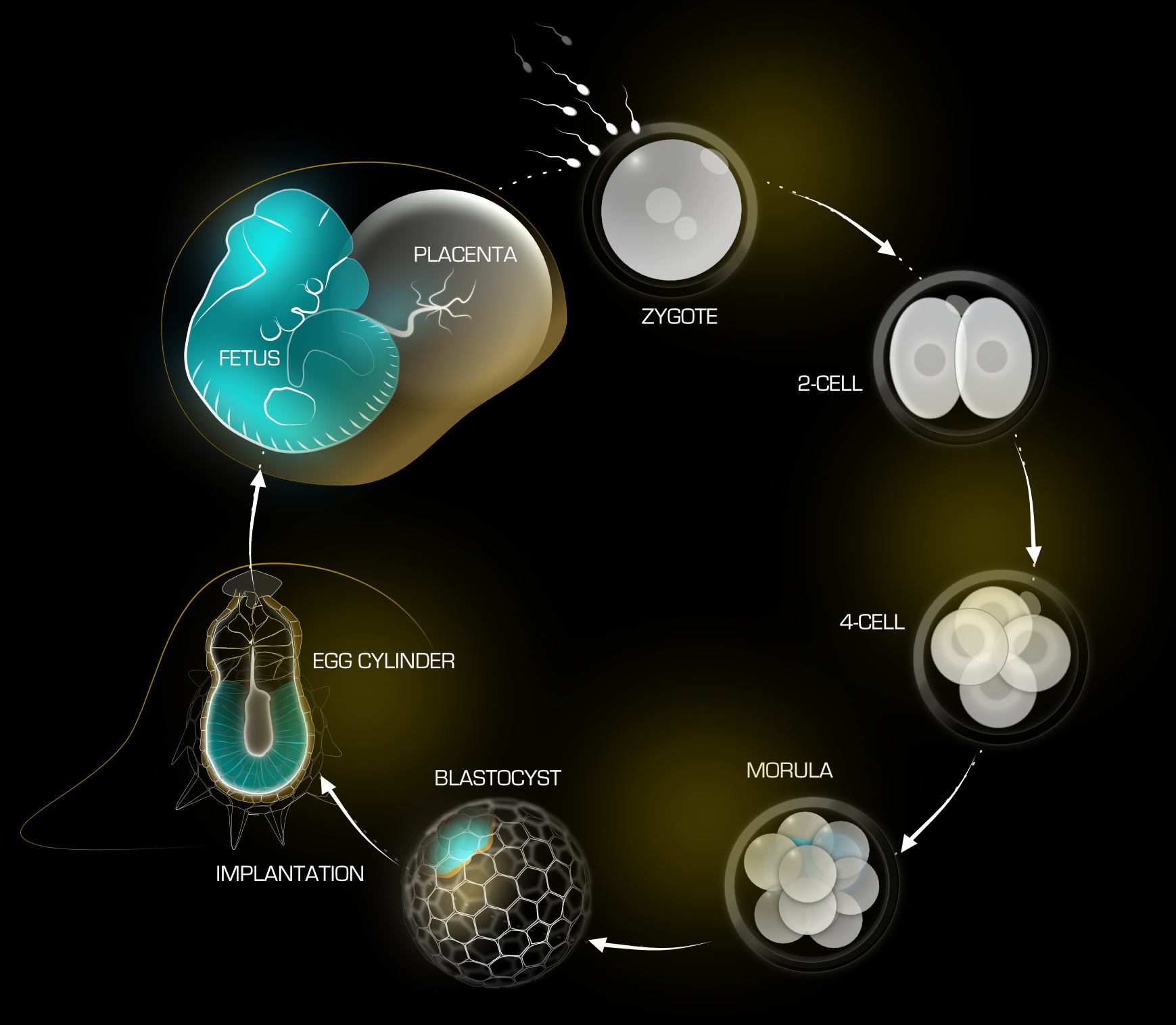
Our first research direction investigates how a single cell develops into an organised embryo. We study the changes in cell behaviour, identity and surroundings as the embryo grows and takes shape, and the coordination of these processes. We are interested in how cells communicate with each other and respond to their physical environment to decide where they should be, what they should become, and how they should work together. By understanding how cell fate and cell/tissue shape are coordinated, we aim to uncover how the cells of the early embryo work together to build the foundations of a developing organism.
2
– FIRST CONTACT –
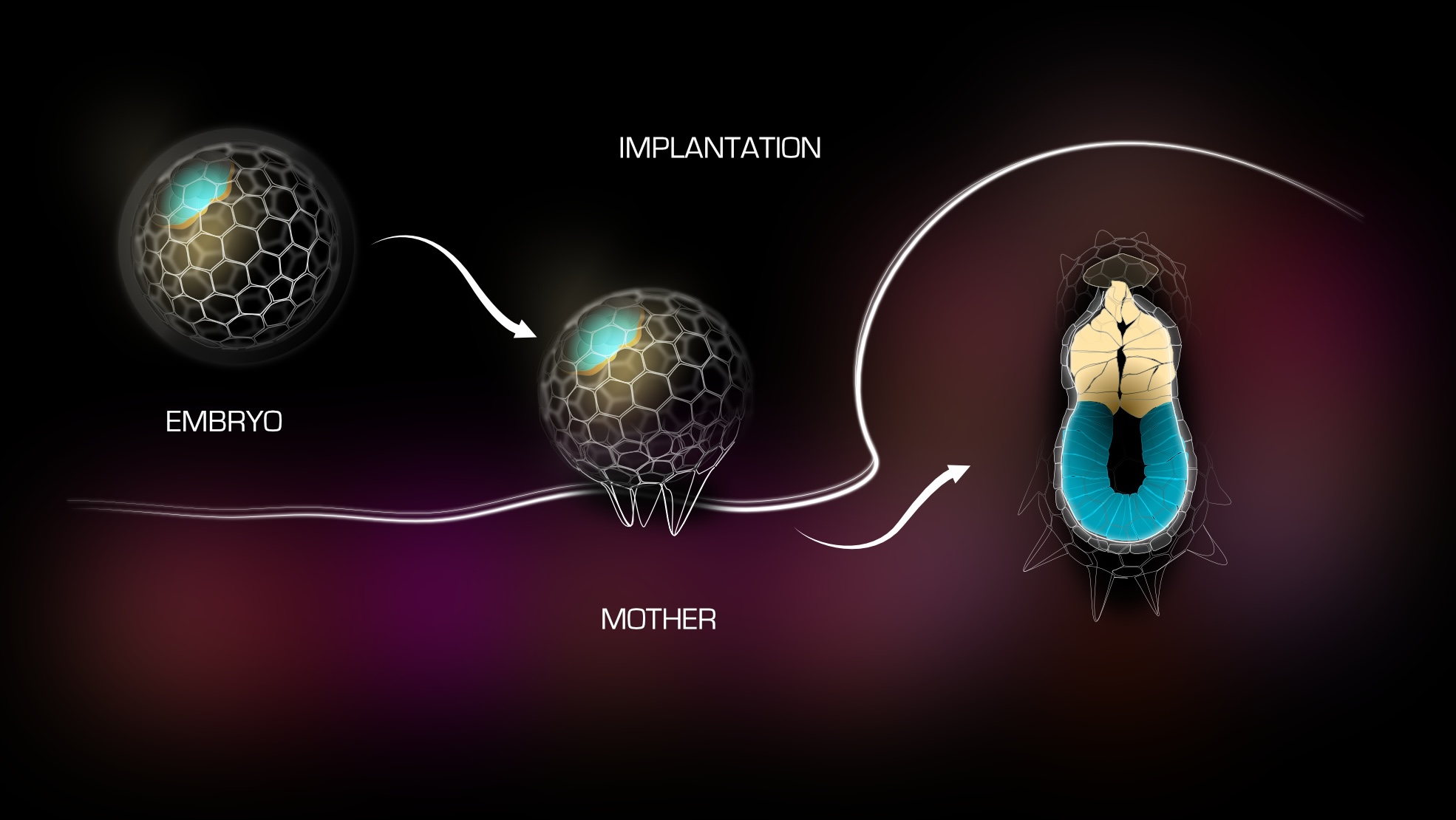
One of the most critical steps in early development is implantation, when the embryo first establishes direct contact with the mother. Despite advances in assisted reproductive technologies, female fertility declines with increasing maternal age, and implantation defects remain one of the major causes of pregnancy failure. Yet, because implanting embryos are concealed within maternal tissues, they are difficult to access and study. As a result, this crucial stage of early mammalian development remains poorly understood.
Our second research avenue aims to understand the cellular mechanisms that shape early embryonic development and the interactions between the embryo and the mother during implantation. We study how the embryo invades the uterine tissue and communicates with different uterine compartments, including blood vessels, stromal cells, and epithelial tissues, and how these interactions change with maternal age. We also investigate how the embryo protects itself from potentially harmful interactions with the maternal environment. In particular, we study how the implanting embryo interacts with, and avoids, the maternal immune system to establish a successful pregnancy. In parallel, we are developing biomimetic embryo–uterine in vitro co-culture systems that recreate these interactions under near-physiological conditions, providing new ways to study the complex process of implantation.
3
– THE SLEEPING EMBRYO –
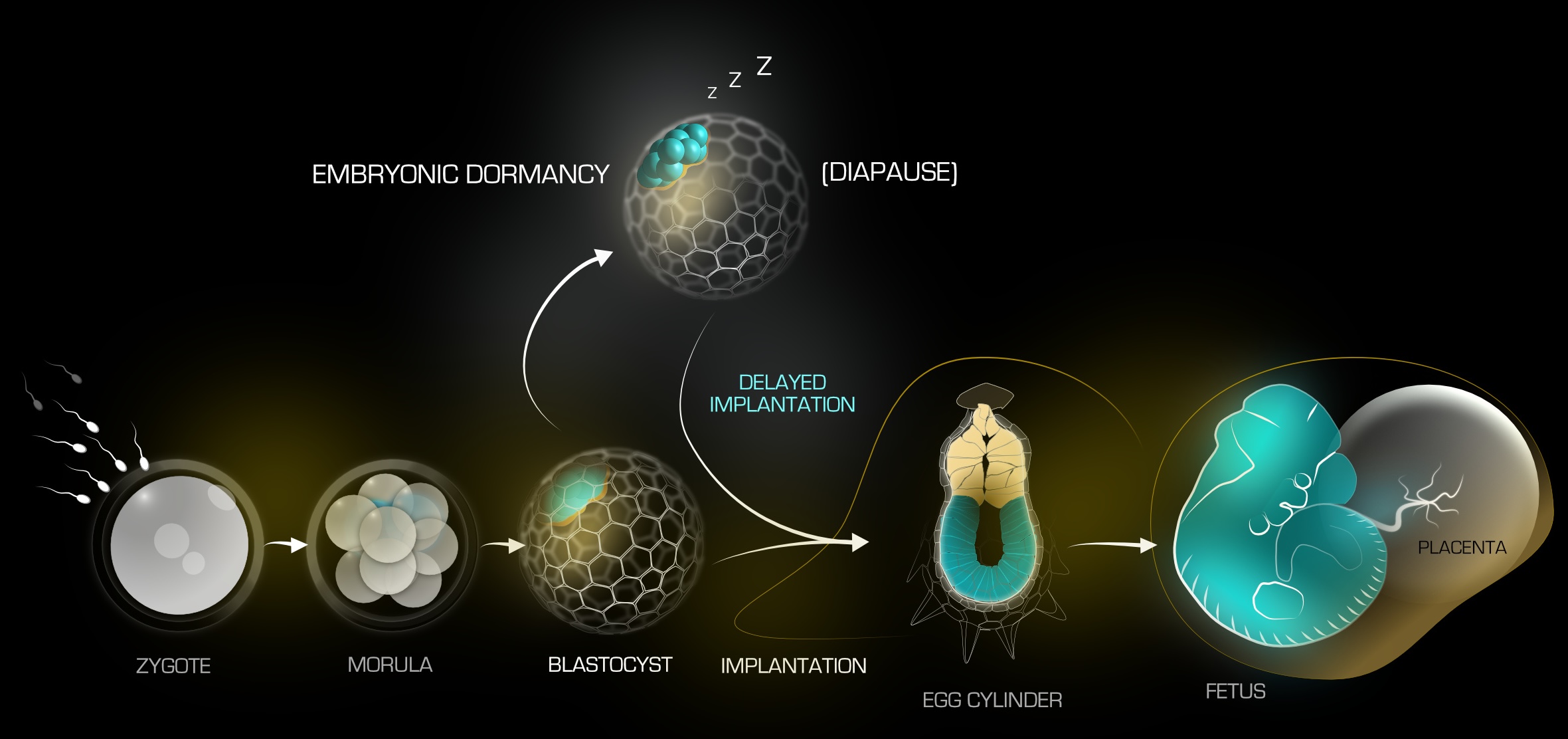
Our third research direction focuses on embryonic dormancy, or diapause – an obscure state in which embryonic development temporarily pauses for an extended period. We study the molecular and cellular mechanisms that allow embryos to enter, maintain and exit this dormant state, with a focus on cell signalling, metabolism, epigenetic regulation and signals from the uterine environment.
Understanding how cells survive and maintain their function during prolonged dormancy could help develop new approaches for embryo preservation and potentially improve fertility treatments. It may also reveal how cells remain viable and healthy for long periods, providing insights into regenerative biology and ageing. By comparing embryonic diapause with dormancy in other cell types, we can also identify common principles that allow cells to enter, maintain and exit a dormant state—both in normal development and in disease, such as dormant cancer cells.
IN A NUTSHELL
Infertility affects around one in six people worldwide and remains a major global health challenge. Despite advances in assisted reproductive technologies, implantation failure is still a major barrier to successful pregnancy. Embryo implantation is the process of establishment of the first direct interactions between the embryo and the mother. Our research focuses on this critical period of mammalian development, through three interconnected research directions.
First, we investigate how the early embryo emerges from a single cell and changes its shape and organisation during early development. We aim to understand how cells coordinate changes in their behaviour and physical environment to build the foundations of the developing organism.
Second, we study how the embryo communicates with the mother during implantation. We investigate how the uterus creates an environment that supports embryo development while also regulating interactions with the uterine tissues, including the maternal immune system and how all this changes during ageing.
Third, we investigate embryonic dormancy, or diapause. In this obscure state, embryos temporarily pause their development and can later resume it. We study how embryos enter, maintain, and exit this dormant state, and what this can teach us about the fundamental mechanisms controlling development and pathological conditions.
Together, these research directions explore how embryos develop, interact with their environment, and adapt to changing conditions at one of the most critical stages of mammalian life.
You must be logged in to post a comment.