
Pluripotency is usually thought of as a property of cell identity: pluripotent cells have the ability to give rise to many different cell types. But being pluripotent also means that a cell has to maintain a particular physical and metabolic state.
We wanted to understand how the transcriptional network that maintains naïve pluripotency influences these less obvious properties of embryonic cells.
Looking beyond cell identity
Mouse embryonic stem cells can exist in different pluripotent states. In the naïve state, cells resemble the epiblast of the pre-implantation embryo. As they progress towards a more developmentally advanced state, their molecular identity, morphology and behaviour change.
We asked whether the transcription factors that control naïve pluripotency also regulate the physical behaviour and metabolism of the cells.
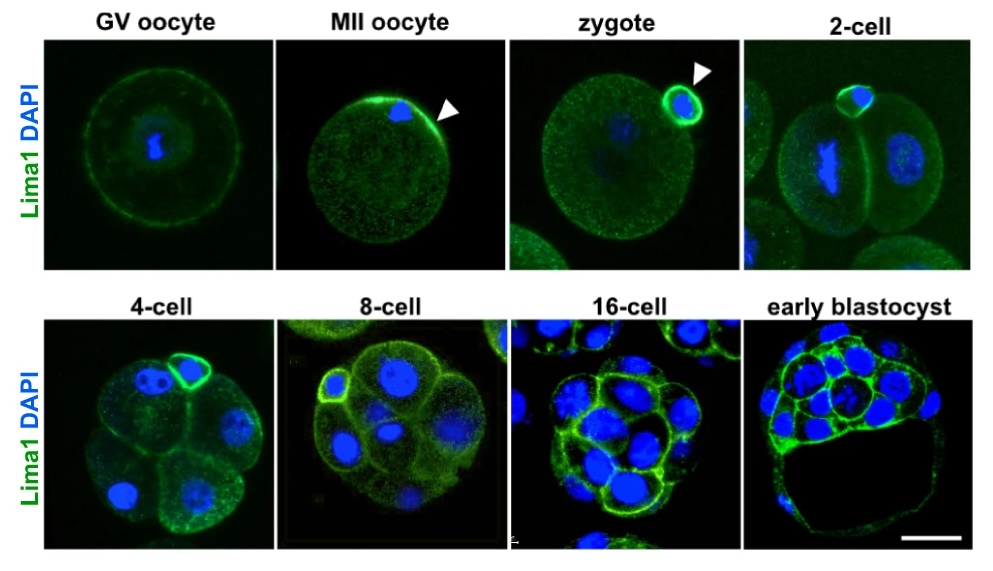
Our search led us to Lima1, a protein previously studied mainly in the context of cancer. We found that Lima1 is directly connected to the naïve pluripotency network and acts as an important effector of this state.
Pluripotency keeps the cell membrane under control
One of the most striking effects we observed was on the cell membrane.
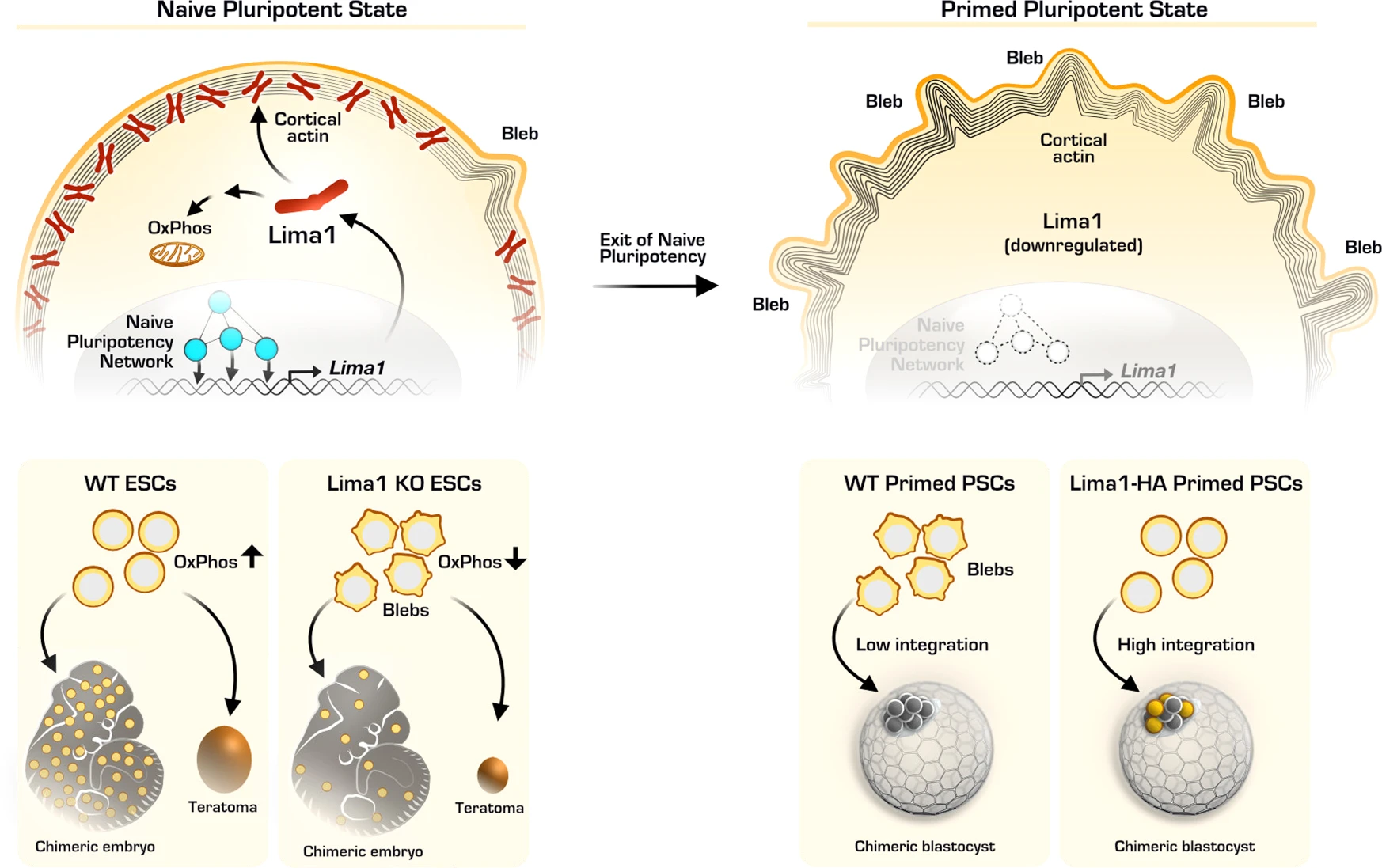
When Lima1 was reduced or removed from embryonic stem cells, the cells developed pronounced membrane blebbing. Instead of maintaining a relatively stable cell surface, the plasma membrane formed dynamic protrusions and blebs.
This revealed an unexpected connection between pluripotency and membrane mechanics.
Lima1 helps maintain the organisation of the cell cortex and membrane, keeping the physical behaviour of naïve pluripotent cells under control.
In other words, the pluripotency network does not only tell a cell which genes to express. It also influences how the cell physically behaves.
Connecting cell identity to metabolism
We then discovered that Lima1 has another important role.
Cells lacking Lima1 showed changes in mitochondrial function and energy metabolism. Their mitochondria were less efficient at maintaining the metabolic state characteristic of naïve embryonic stem cells.
This was particularly interesting because membrane dynamics and metabolism are usually studied as separate aspects of cell biology.
Our findings suggested that they can instead be coordinated through the pluripotency programme.
We therefore identified Lima1 as a molecular link connecting three fundamental properties of a pluripotent cell:
cell identity → membrane dynamics → cellular metabolism
Can changing Lima1 change cell behavior?
We next asked whether Lima1 could influence the developmental behaviour of cells that were no longer in the naïve state.
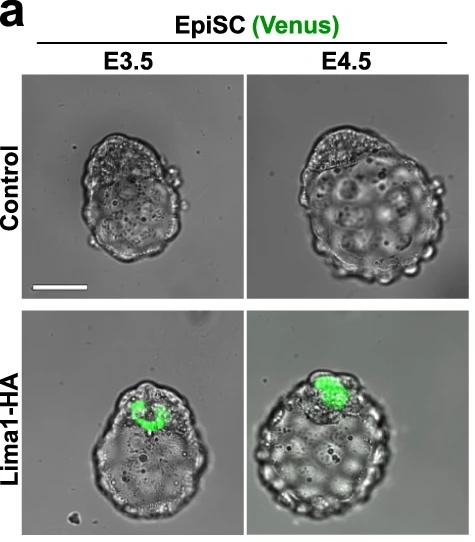
When we forced Lima1 expression in primed mouse and human pluripotent stem cells, these cells became capable of incorporating into mouse pre-implantation embryos.
This was particularly striking because primed cells normally have a very limited ability to integrate into the pre-implantation embryo.
Our findings suggested that restoring a component of the naïve pluripotency programme can change not only the transcriptional state of a cell, but also its physical compatibility with the early embryo.
A broader view of pluripotency
These findings led us to a broader perspective on what it means for a cell to be pluripotent.
Pluripotency is not simply a collection of genes that keeps developmental potential switched on. It is a multidimensional cellular state that involves transcription, metabolism, membrane behaviour and interactions with the surrounding tissue.
Lima1 provides an important connection between these different layers.
We found that the naïve pluripotency network controls Lima1, which in turn helps regulate membrane dynamics and mitochondrial energetics.
This suggests that changes in cell identity are accompanied by—and may depend on—changes in the physical and metabolic state of the cell.
Ultimately, our work highlights how transcriptional programmes can reach far beyond the nucleus. By controlling proteins such as Lima1, the pluripotency network can shape how a cell moves, how its membrane behaves and how it generates energy.
Understanding these connections may help us better understand how pluripotent cells adapt to their environment and why different pluripotent states have such distinct cellular behaviours.
Read the research article:
Lima1 mediates the pluripotency control of membrane dynamics and cellular metabolism.
Duethorn B, Groll F, Rieger B, Drexler HCA, Brinkmann H, Kremer L, Stehling
M, Borowski MT, Mildner K, Zeuschner D, Zernicka-Goetz M, Stemmler MP, Busch KB, Vaquerizas JM, Bedzhov I.
Nature Communications 2022
https://doi.org/10.1038/s41467-022-28139-5

You must be logged in to post a comment.